
Gestational surrogacy has become one of the most widely used and medically advanced family-building options for people who cannot carry a pregnancy themselves. With growing acceptance, clearer legal frameworks, and advances in IVF technology, gestational surrogacy is now a realistic path to parenthood for many individuals and couples—especially in the United States.
This guide explains what gestational surrogacy is, how it works, how much it costs, and how it differs from traditional surrogacy, while answering the most common questions people search for today.
What Is Gestational Surrogacy?
Gestational surrogacy is a type of surrogacy in which a woman—called a gestational carrier or surrogate—carries a pregnancy for intended parents without having a genetic connection to the baby.
The embryo is created through in vitro fertilization (IVF) using:
- The intended parents’ egg and sperm, or
- Donor eggs, donor sperm, or both
That embryo is then transferred to the gestational surrogate’s uterus. Because the surrogate is not genetically related to the child, gestational surrogacy is legally and emotionally distinct from older surrogacy models.
This model now accounts for the vast majority of surrogacy arrangements worldwide.
Gestational Surrogacy vs. Traditional Surrogacy
One of the most common questions is: What is the difference between gestational and traditional surrogacy?
Key differences at a glance:
| Feature | Gestational Surrogacy | Traditional Surrogacy |
|---|---|---|
| Genetic link to surrogate | ❌ No | ✅ Yes |
| Method of conception | IVF | Artificial insemination |
| Legal complexity | Lower | Higher |
| Common today | Very common | Rare |
Traditional surrogacy involves the surrogate using her own egg, making her the child’s biological mother. Because of the legal and emotional risks involved, traditional surrogacy is now uncommon, especially in the United States.
How Does Gestational Surrogacy Work?
The gestational surrogacy process follows a structured medical, legal, and emotional pathway. While timelines vary, most journeys take 15–24 months from start to finish.
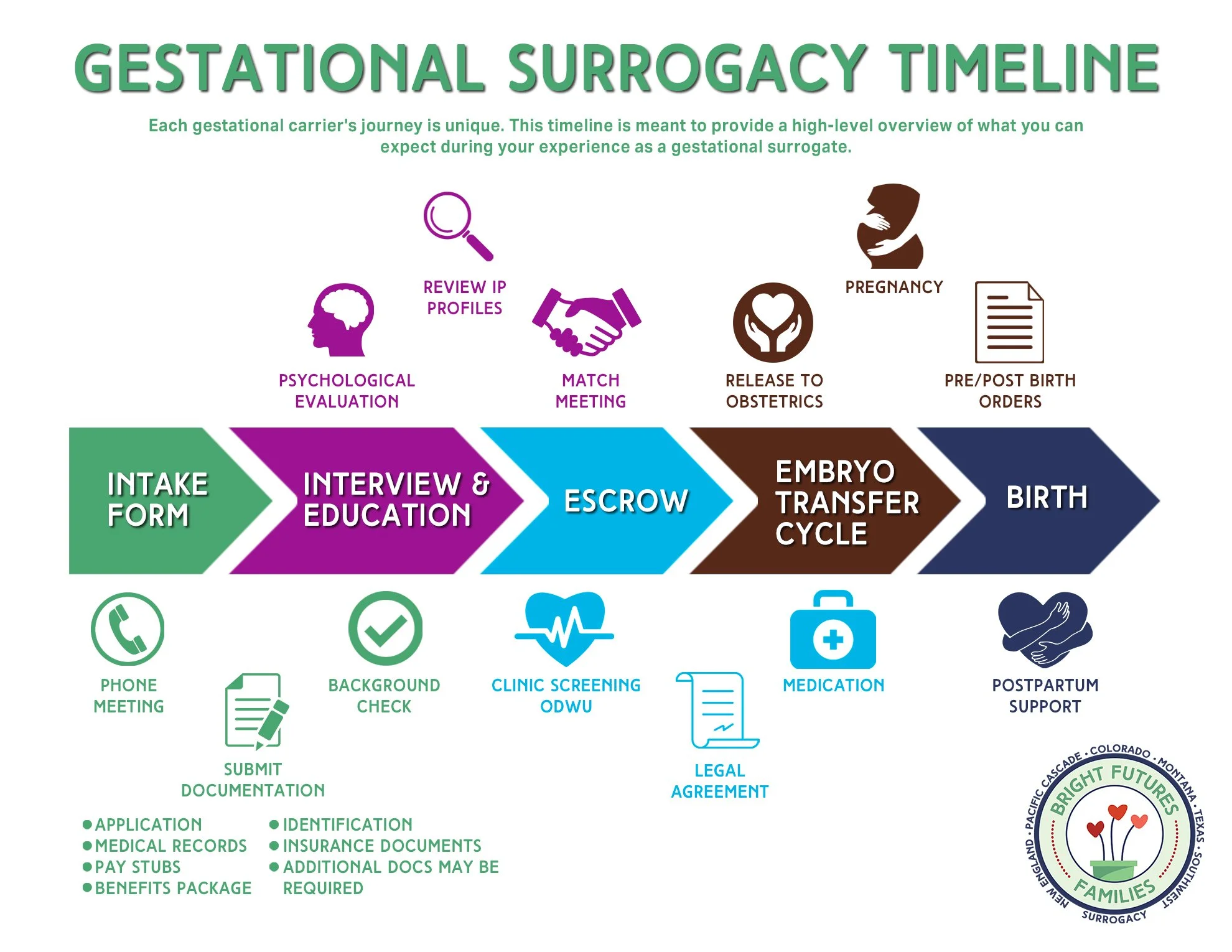
1. Medical Screening and Matching
The surrogate undergoes extensive medical, psychological, and lifestyle screening. Intended parents are matched with a surrogate based on medical compatibility and personal preferences.
2. Legal Agreements
Separate attorneys represent the surrogate and intended parents. Contracts define:
- Parental rights
- Compensation
- Medical decisions
- Pregnancy expectations
These agreements are completed before any medical procedures begin.
3. IVF and Embryo Creation
Eggs are retrieved from the intended mother or egg donor and fertilized in a lab. Healthy embryos are selected for transfer.
4. Embryo Transfer
A single embryo (sometimes two, depending on medical guidance) is transferred to the surrogate’s uterus.
5. Pregnancy and Birth
Once pregnancy is confirmed, the surrogate receives routine prenatal care. Intended parents are typically involved throughout the pregnancy and are legally recognized at birth in most gestational surrogacy-friendly states.
Who Chooses Gestational Surrogacy?
Gestational surrogacy is used by a wide range of people, including:
- Women with uterine factor infertility
- Cancer survivors
- Individuals with serious medical conditions that make pregnancy unsafe
- Same-sex male couples
- Single intended parents
Its flexibility and medical safety make it one of the most inclusive reproductive options available today.
Gestational Surrogacy Cost in the United States
One of the most searched questions is: How much does gestational surrogacy cost?
Average cost range:
$100,000 – $150,000+
Cost breakdown includes:
- Surrogate compensation
- IVF and fertility clinic fees
- Legal fees
- Agency coordination
- Health insurance and medical expenses
- Travel and miscellaneous costs
Costs vary depending on location, insurance coverage, use of donor eggs or sperm, and whether complications arise.
While expensive, many intended parents view gestational surrogacy as a long-term investment in building their family.
Legal Status of Gestational Surrogacy in the United States
Gestational surrogacy laws vary by state, but overall, the United States is considered one of the most surrogacy-friendly countries in the world.
Generally:
- Many states explicitly allow gestational surrogacy contracts
- Courts often issue pre-birth orders recognizing intended parents
- Legal protections are stronger than in most countries
However, laws differ significantly by state, so working with experienced legal counsel is essential.
Risks and Considerations
Like any medical process, gestational surrogacy involves risks, though serious complications are uncommon.
For the surrogate:
- Typical pregnancy risks (gestational diabetes, preeclampsia)
- Emotional challenges after birth (managed through screening and support)
For intended parents:
- Financial risk
- Emotional uncertainty if IVF cycles fail
- Legal complexities if contracts are not properly handled
Careful planning and professional guidance significantly reduce these risks.
Emotional and Ethical Aspects of Gestational Surrogacy
Beyond medicine and law, gestational surrogacy is deeply human.
Successful journeys are built on:
- Mutual respect
- Clear communication
- Emotional support for all parties
Many surrogates describe the experience as empowering, while intended parents often view it as profoundly life-changing.
Ethically, gestational surrogacy emphasizes informed consent, fair compensation, and bodily autonomy—key reasons it has gained broader acceptance over time.
Why Gestational Surrogacy Is So Popular Today
Search trends show steady growth in interest for gestational surrogacy, especially in the United States. Key reasons include:
- Advances in IVF success rates
- Greater legal clarity
- Increased visibility of non-traditional families
- Social acceptance of assisted reproduction
As fertility technology improves and awareness grows, gestational surrogacy is expected to become even more common worldwide.
Final Thoughts
Gestational surrogacy offers a medically advanced, legally structured, and emotionally meaningful path to parenthood for people who might otherwise have no option to carry a child. While it requires significant planning, financial commitment, and emotional readiness, it has helped thousands of families turn hope into reality.
If you’re exploring gestational surrogacy, understanding the process, costs, and legal landscape is the first—and most important—step toward making an informed decision.